Vol. 1 No. 44 (2025): REVISTA DE LETRAS
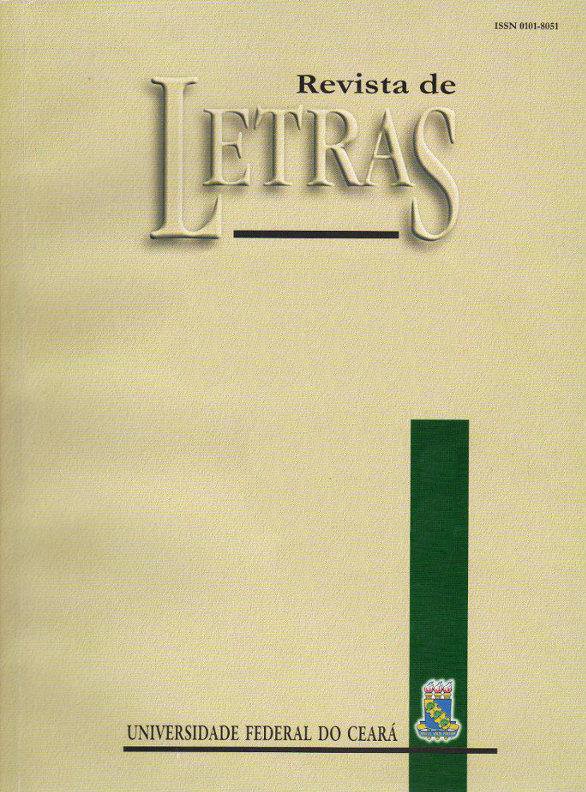
The circulation of translated literature is a rich and complex phenomenon involving global flows. This issue of Revista de Letras is dedicated to the flow between the Americas and Europe and is the result of the event Circulation of Literature Between the Americas and Europe, held in June 2023 at the VUB, Free University of Brussels.
Throughout history, there has been a continuous exchange of literary works between these two continents, fueling an enriching cultural and literary dialogue. Translations allow authors' voices and cultural perspectives to be shared across linguistic boundaries, connecting readers from different parts of the world. Authors such as Gabriel García Márquez, Julio Cortázar, Clarice Lispector, and Machado de Assis have had their works widely translated into English, French, Spanish, and other European languages, allowing their voices to resonate in other literary spaces. Conversely, translations of William Shakespeare, Miguel de Cervantes, and Dante Alighieri helped shape the literary canons of the Americas.
The transatlantic circulation of translated literature has been driven by both cultural and commercial factors. Publishers play a crucial role in selecting and promoting works for translation. As Pascale Casanova (2002) noted in The World Republic of Letters, translation flows are asymmetrical, with European works often reaching a wider audience in the Americas than vice versa. This circulation has a significant impact on the formation of literary identities and the enrichment of the global landscape. By reading translated works, readers are exposed to new perspectives, styles, and themes, broadening their literary horizons. This transatlantic exchange also promotes intercultural dialogue, leading to a deeper understanding of the differences and similarities between literary traditions.
In this context, the articles gathered here explore different aspects of transatlantic circulation and the modes of cultural mediation that manifest themselves in the act of translation. Each article shows how translation, in its various forms (interlinguistic, intersemiotic, and intercultural), constitutes a space for creation and critical reflection on the relationships between language, body, image, and power.
Published:
2025-11-28
.png)




.png)